( Acrididae )
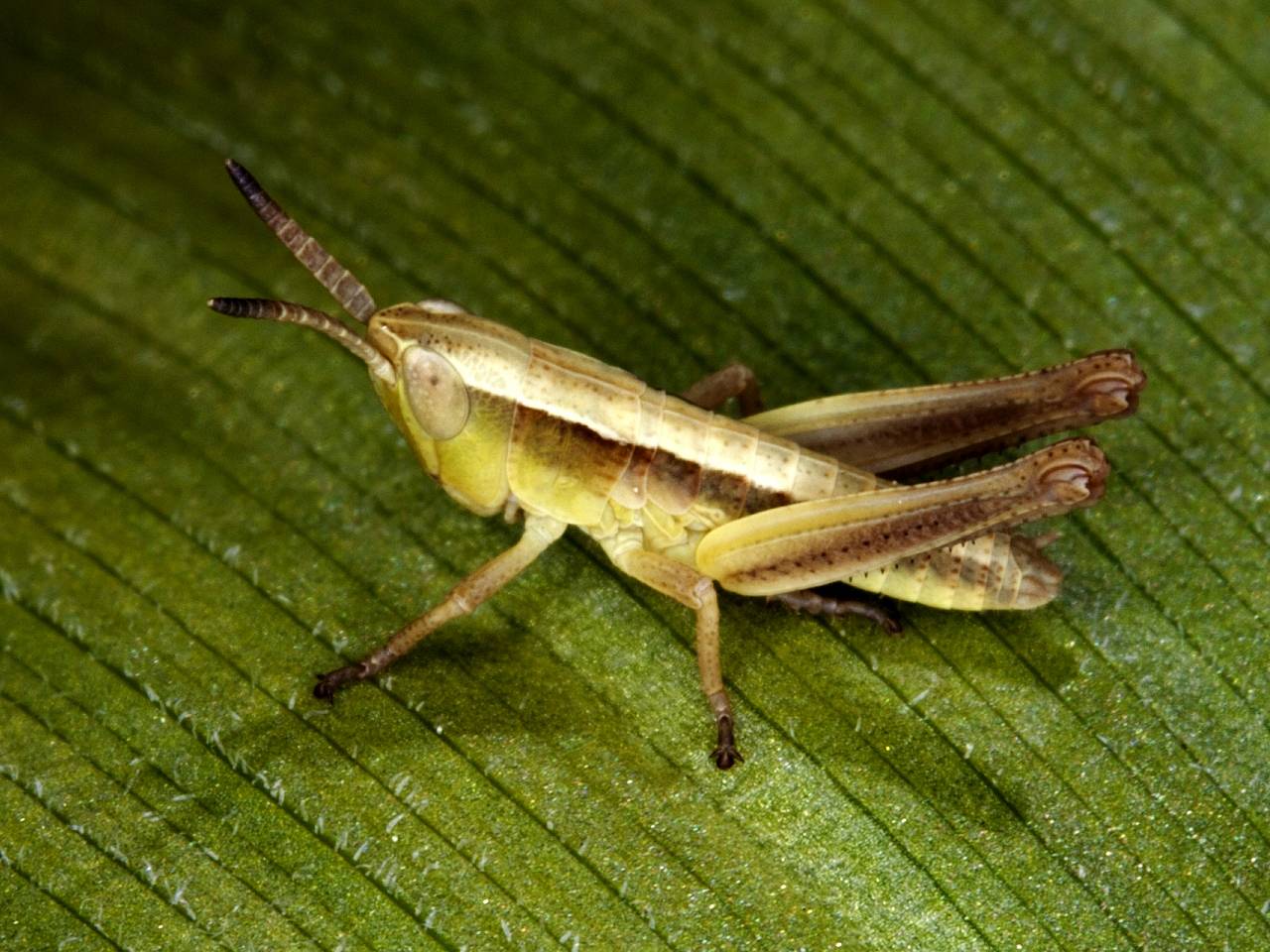


(MacLeay, 1819)
LOCATION DETAILS
RECOGNITION
BIOLOGY
HABITAT
CREDITS
Brad Smith
REFERENCES
| Short-horned Grasshopper ( Acrididae ) | |
| |
|
| |
| IDENTIFICATION | |
| Identification: | Acrididae (MacLeay, 1819) |
| Common Name: | Short-horned Grasshopper |
| Life Stage: | A |
| PHYLOGENY | |
| Phylum: | Arthropoda |
| Class: | Insecta |
| Superorder: | Polyneoptera |
| Order: | Orthoptera |
| Suborder: | Caelifera |
| Family: | Acrididae |
| Taxon Code: | ORT01893 |
| ITIS TSN#: | 102195 |
LOCATION DETAILS | |
| Location | |
| Blue Lake Campground, Modoc National Forest, Forest Rt. 64, Likely | |
| County: | Modoc County County |
| ECI Site#: | CANF100000 |
| Park/Forest: | Modoc National Forest |
RECOGNITION | |
| Variable coloring with some brightly colored species. Wings: Usually well-developed, but may be short or absent in some groups. Wing length is variable, even within a single species. Pronotum: Does not extend beyond the base of the wings. Antennae: Short, typically about one-half the body length, and with less than 30 segments. Tympana: When present, are on the sides of the first abdominal segment. Legs: Hind femora are greatly enlarged for jumping, typically about as long as hind wings. Tarsi are all 3-segmented. Ovipositor: Short and stout. | |
| Body Length | |
| 9-80 mm, with most 15-30 mm. | |
| Similar Taxa | |
| Lubber Grasshoppers (Romaleidae); Pygmy Grasshoppers (Tetrigidae) | |
BIOLOGY | |
| Food | |
| Typically phytophagous, feeding on the foliage of forbs and grasses. Some feed on a variety of plants, while others are restricted to a few species of closely related plants. Dry plant matter from the ground is not fed upon. Some will scavenge dead or dying grasshoppers when plant food is scarce. | |
| Habitat | |
| Vegetated areas or open space, including on asphalt-covered parking lots or similar areas. Most species occur in grasslands, but some in forests, tundra and aquatic vegetation. | |
| Active Period | |
| Spring to fall in temperate areas. Some species are present all year in southern California. | |
| Development | |
| Some species have fairly elaborate courtship, and mating may take up to an hour. Males may stay atop females for more than a day in a behavior known as "mate guarding." Females oviposit in loose soil (typically), among plant roots, in rotting wood, and even in dung. Clutches contain 10-60 eggs, and up to 25 clutches may be laid over several weeks. Oviposition typically occurs in late summer, and eggs hatch in Spring. Life cycle is typically one year. A few species overwinter as juveniles. | |
| Importance | |
| Members of this family are historical devastators of crops in Africa, the Middle East and Asia. | |
| Range | |
| All of North America. | |
HABITAT | |
| Vegetated areas or open space, including on asphalt-covered parking lots or similar areas. Most species occur in grasslands, but some in forests, tundra and aquatic vegetation. | |
CREDITS | |
| Photographer Brad Smith | |
REFERENCES | |
